
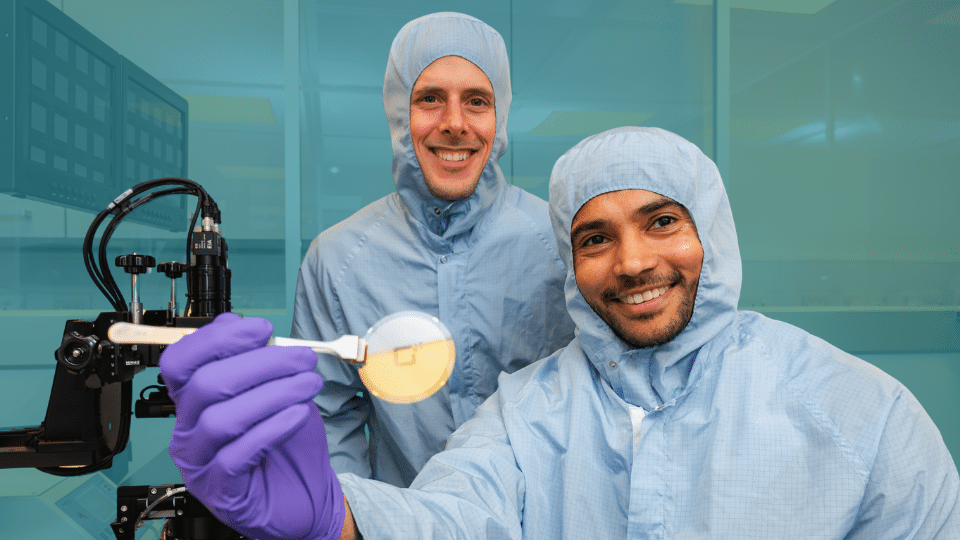
Oxford Innovation EIS Growth Fund alongside OION angel investors has invested in Semarion, a University of Cambridge spin-out developing innovative cell assay technologies to improve drug discovery workflows.
Semarion is transforming how adherent cells are handled in drug discovery through its proprietary SemaCyte® microcarrier platform, which enables cells to be used as assay-ready, barcoded reagents. This approach allows pharmaceutical and biotech companies to generate richer datasets, improve scalability and integrate more seamlessly with automated workflows. Having already gained traction with leading pharmaceutical organisations across the US and Europe, with multiple pilot programmes heading towards broader commercial rollout, Semarion is also progressing strategic collaborations with global life sciences tools providers to embed its technology into existing research platforms.
This latest £2.9 million funding round will support the Company’s continued commercial expansion, including scaling manufacturing capacity and strengthening its field application support team. With a growing pipeline of opportunities and increasing demand from the pharmaceutical industry, Semarion is focused on accelerating adoption of its platform across global markets.
Jeroen Verheyen, CEO and Co-Founder of Semarion, added: “This investment marks an important milestone as we continue to scale our technology and expand our commercial footprint. We are pleased to have the support of Oxford Innovation Finance and the OION network as we accelerate adoption of the SemaCyte platform and deliver greater value to our customers.”
This latest investment from Oxford Innovation Finance reflects its continued focus on backing innovative companies addressing critical challenges in life sciences and healthcare with strong commercial potential, supporting them with both capital and access to its extensive investor network.
Chris Oliver, Investment Principal at Oxford Innovation Finance, said: “Semarion is addressing a clear and growing need in drug discovery for more scalable and data-rich cell-based assays. We have been particularly impressed by the team’s ability to translate cutting-edge research into a commercially viable platform, and we are pleased to support the Company as it scales adoption with global pharmaceutical partners.”